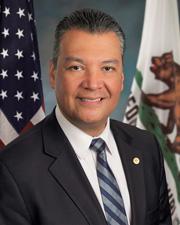
Alex Padilla
U.S. Senator · CA · California senator focused on immigration, judiciary, and climate policy
Fast statistical read before interpretation
Aggregate modeled elections · as of 2026-06-04
Summary totals aggregate the modeled election tabs below. Static public-source snapshot; replace with exact FEC/state filing exports during ingestion.
Aggregate large-donor view combines curated public itemized records from modeled election tabs; missing names remain explicitly noted rather than inferred.
2024-01-01 to 2026-06-04 · top outlet: AP
Tracked against the fixed MVP outlet set; replace with live GDELT query dates during ingestion.
GDELT-style topic associations
Search demand and network coverage framing
These are public-source and method-based signals about what people search and what major coverage clusters emphasize; they are not Perception endorsements or quality claims.
Static public-interest snapshot ranking common searches around Alex Padilla; replace with audited Google Trends, news-search, or social-listening exports when connected.
Static public-interest snapshot ranking common searches around Alex Padilla; replace with audited Google Trends, news-search, or social-listening exports when connected.
Static public-interest snapshot ranking common searches around Alex Padilla; replace with audited Google Trends, news-search, or social-listening exports when connected.
Static public-interest snapshot ranking common searches around Alex Padilla; replace with audited Google Trends, news-search, or social-listening exports when connected.
Static public-interest snapshot ranking common searches around Alex Padilla; replace with audited Google Trends, news-search, or social-listening exports when connected.
AP coverage is modeled as focusing on immigration for Alex Padilla, with the outlet share snapshot placing it at 17% of the tracked network/news mix.
Reuters coverage is modeled as focusing on judges for Alex Padilla, with the outlet share snapshot placing it at 16% of the tracked network/news mix.
LA Times coverage is modeled as focusing on climate for Alex Padilla, with the outlet share snapshot placing it at 15% of the tracked network/news mix.
NYT coverage is modeled as focusing on fundraising network for Alex Padilla, with the outlet share snapshot placing it at 14% of the tracked network/news mix.
CNN coverage is modeled as focusing on electoral stakes for Alex Padilla, with the outlet share snapshot placing it at 12% of the tracked network/news mix.
Disclosure ranges, not exact bank balances
Estimated from Senate disclosures using midpoint-style asset and liability ranges.
Left-right model, not a value judgment
Following, wealth, positions, media, money, and electoral power
Formal office, party leadership, committee leverage, and current agenda-setting power.
Share and intensity in the tracked national news and network coverage set.
Relevance to presidential, statewide, nationally watched, or party-defining elections.
Public-platform reach across modeled official, campaign, and public social accounts.
Aggregate modeled campaign receipts, PAC/committee support, and donor infrastructure.
Estimated disclosure-range midpoint and public wealth context, not exact bank balance.
California senator with national visibility on immigration, federal courts, election administration, and coalition politics tied to the largest Democratic state delegation.
Source-backed synthesis, not Perception endorsement
Alex Padilla is best read as a democratic power figure whose profile centers on immigration and judges.
Their practical influence comes through committee leverage and Senate votes, fundraising networks, media attention, and coalition relationships tracked in this profile.
Public attention clusters around AP and Reuters coverage plus issue associations in the tracked news set.
MVP influencer monitoring treats immigration as the dominant narrative to verify against podcasts, YouTube, X, newsletters, and cable clips.
Trend fields are MVP snapshots: use the listed query terms and date ranges as the future ingestion contract for Google Trends, X, Instagram, and vendor social-listening data.
This profile is structured as durable civic data: every claim should either cite a source, name a method, or be easy to replace with a live ingestion result.
Source-backed issue stance summaries
Immigration is tracked as a standard comparison issue. For this MVP, the stance summary is inferred from party alignment, office record, campaign material, and cited public sources, then should be replaced by issue-specific vote/platform ingestion.
Judges is tracked as a standard comparison issue. For this MVP, the stance summary is inferred from party alignment, office record, campaign material, and cited public sources, then should be replaced by issue-specific vote/platform ingestion.
Climate is tracked as a standard comparison issue. For this MVP, the stance summary is inferred from party alignment, office record, campaign material, and cited public sources, then should be replaced by issue-specific vote/platform ingestion.
Democracy / elections is tracked as a standard comparison issue. For this MVP, the stance summary is inferred from party alignment, office record, campaign material, and cited public sources, then should be replaced by issue-specific vote/platform ingestion.
Economy is tracked as a standard comparison issue. For this MVP, the stance summary is inferred from party alignment, office record, campaign material, and cited public sources, then should be replaced by issue-specific vote/platform ingestion.
Abortion is tracked as a standard comparison issue. For this MVP, the stance summary is inferred from party alignment, office record, campaign material, and cited public sources, then should be replaced by issue-specific vote/platform ingestion.
Education, home state, and public family bio
Public biographical snapshot; family counts and residence can change and should be refreshed from official bios/public disclosures.
2024-01-01 to 2026-06-04
MVP estimate based on critical/negative tone, 0% legal/conflict topic association, 0% personal/family association, and concentrated conflict coverage in the tracked outlet set.
Coalition and governing network
Historical records for long-term study
Represented the San Fernando Valley in the California State Senate.
Served as California's chief elections official.
Appointed then elected to represent California in the Senate.
Built visibility on judges, voting systems, immigration, and climate-linked California priorities.
Structured snapshot tying office history, money, media topics, issue stances, and trend placeholders into one reusable civic-data record.
Quick scan
Entered elected office in Los Angeles municipal government and later served as council president.
Represented the San Fernando Valley in the California State Senate.
Served as California's chief elections official.
Appointed then elected to represent California in the Senate.
Built visibility on judges, voting systems, immigration, and climate-linked California priorities.
Coalition and career resemblance
Every profile starts with public sources
MVP note: controversy, funding, net worth, and coverage values are seeded estimates structured for future FEC, GDELT, disclosure, and Congress.gov ingestion.